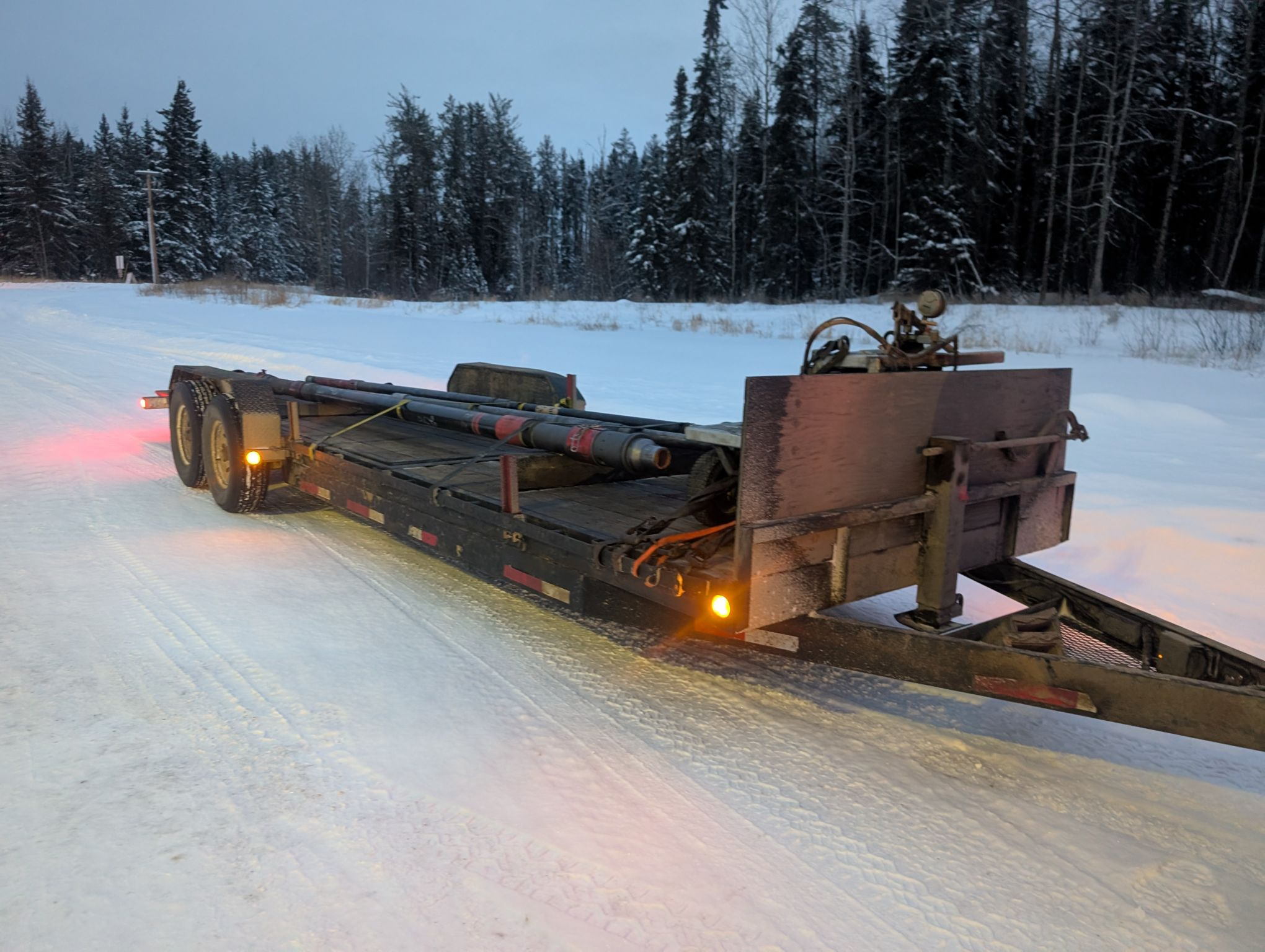
Last week’s operation presented a genuine reason for concern—and not only because a blizzard swept through the field. Severe cold is something our crews are well prepared to manage, with established procedures to protect personnel and maintain safe operations.
The real challenge came from the well itself.
A Difficult Well in Advanced Stages of Aging
As wells continue to age, corrosion under high-temperature and H₂S conditions becomes increasingly severe. In this case, corrosion had significantly affected the casing, creating ledges and restrictions that complicated what was intended to be a relatively shallow Surface Casing Patch installation.
During the run-in, the tool repeatedly encountered resistance and would not pass freely. Each attempt required careful handling, despite the casing having been properly drifted and fully compliant with standard procedures.
Managing Risk During Installation
The underlying issue was corrosion combined with off-center contact between the patch and one side of the casing during run-in. Although the slips mechanism is designed to centralize the patch during setting, this situation raised critical questions:
-
What if the patch did not fully centralize?
-
What if the lower sealing element, required for pressure testing, failed to hold due to off-center placement?
-
What if the already-corroded production casing at that depth further compromised test integrity?
In such a scenario, the customer would have been forced to perform a pressure test using an inflated packer, resulting in additional time, cost, and operational complexity.
Execution Under Extreme Conditions
Despite the risks, both sealing elements were set using standard procedures, and all mechanisms functioned exactly as designed—an encouraging milestone given the well conditions.
The next step was the pressure test—the moment of truth. Under extreme cold, the crew continuously kept the pressure gauge warm to ensure accurate readings. The test was completed successfully, and the customer confirmed a solid pressure test.
Results That Matter
The outcome speaks for itself. The well was returned to production without additional intervention, unnecessary downtime, or extra cost. Another aging well is now back online and producing oil—despite challenging corrosion, harsh weather, and demanding conditions.
This operation reinforces the value of robust tool design, disciplined procedures, and experienced field execution when working in complex environments.